

November 9 2009
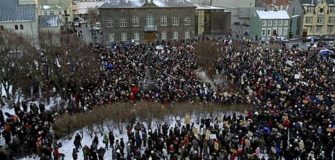
Photographer Ed Ou has graciously shared with us these photos from the area, with thanks to the excellent Reportage by Getty Images. (25 photos total)
Ecrire un commentaire - Voir les 0 commentaires - Recommander
21 October, 2009
By Robin Davis
While global warming dominates the headlines a more urgent danger threatens life on earth. Global warming could make the planet uninhabitable by the end of the century. Global cooling - the "Nuclear Winter" that would follow nuclear war - could achieve the same result in days or weeks.
Since the collapse of the Soviet Union a disturbing complacency has set in. It is as if the threat imposed on us all by the hair-trigger readiness of thousands of intercontinental nuclear-armed missiles no longer exists. Perhaps this is understandable with the political and media discussion of the issue focussed almost entirely on the potential danger posed by non-state terrorism and so-called "rogue" states.
The selective finger pointing, fear mongering and drum beating only serves to distract attention from the chilling reality: the US and Russia still possess 97% of the world's nuclear weapons and neither has any genuine commitment to nuclear disarmament. It is they and the other 7 established nuclear weapon states that pose the greatest threat to humanity and all other species on the planet.
If even a tiny fraction of the world's nuclear arsenal were unleashed catastrophic climate change would follow. For example, a "small" nuclear war employing 100 bombs of the size that destroyed Hiroshima and Nagasaki would pour millions of tons of smoke into the stratosphere. The smoke would come from the raging firestorms consuming cities, industries, neighbourhoods and people. As the smoke spread around the globe it would reduce the sunlight and destroy much of the protective ozone layer. Temperatures would drop and food production would plunge due to shortened growing seasons. Hundreds of millions of people, possibly a billion, would starve to death. [1] Think of Hiroshima. Imagine 100 times Hiroshima. (3) And this can quite accurately be described as a "small" conflict because it would be equivalent to less than half of 1% of the explosive power of US and Russian high-alert nuclear weapons. [2] That figure bears repeating: less than half of 1%.
A large conflict involving all of the Russian and US high-alert nuclear weapons would pour 50 million tons of smoke into the stratosphere, blocking the sunlight and dropping global temperatures by 4°C. [1] Think of Hiroshima. Imagine 79,000 times Hiroshima. (4)
Now consider a war involving the entire world operational nuclear arsenal. Think of Hiroshima. Imagine 177,000 times Hiroshima. (5) 150 million tons of smoke would rise into the stratosphere enveloping the planet, absorbing the sunlight, reducing global temperatures by 8°C; creating another Ice Age.
Climate change from global cooling would occur not in decades or years but in weeks or days. Survivors would have no time to adapt. [1] Until they died off from the lethal radioactive fallout they would be left with razed cities, destroyed infrastructure, horrific injuries, birth deformations, cancers, disease epidemics and mass starvation. Perhaps the tens of millions or hundreds of millions instantly vapourised or incinerated would be the lucky ones.
The potential for a catastrophic mistake is enormous, particularly in the case of a suspected submarine launched attack. Russian and US "Launch on Warning" systems" would give their presidents only 2 to 3 minutes to decide whether or not to retaliate. [6] Typical warheads have 20 times the destructive power of the Hiroshima bomb. Typical nuclear missiles carry 8 or more of these independently programmed to destroy multiple targets. Think of Hiroshima. Imagine 160 times Hiroshima - from one missile.
With this spectre hovering over humanity it is difficult to understand how anyone, least of all an environmental luminary
like James Lovelock, could advocate nuclear power as a solution to global warming. [7] This solution sidesteps the health, environmental and security dangers associated with building and
operating at least a thousand nuclear reactors; the increased environmental and security risks associated with mining, transportation, processing and storage of vastly increased quantities of
uranium and deadly radioactive waste; and the fact that high grade, low cost uranium deposits consumed even at the present rate will be exhausted in fifty years. [8]
More importantly, it overlooks the enormous danger posed by more leaders of more nuclear weapons states (that would inevitably emerge) with their fingers on more doomsday buttons. While there are nuclear reactors, there will be nuclear weapons. While "peace-loving" countries like Australia mine and export uranium they are complicit in keeping the world on the brink of nuclear annihilation.
Here in Australia, advocates of uranium mining and export claim that this gives us a more credible voice in the world arena than we would otherwise have. They say our position as the largest source of uranium and the second largest exporter after Canada makes us more effective in preventing nuclear proliferation than we would otherwise be. In other words, by selling the stuff from which nuclear weapons are made, we are helping to stop the spread of nuclear weapons.
This absurd reasoning extends to the so-called "safeguard" agreements - essentially book-keeping entries - that supposedly track every morsel of "Australian Obligated" uranium during its travels around the world, including its reprocessing and on-selling. We can rest assured that Australian uranium won't be used to make nuclear weapons - or free up other uranium for that purpose - because we say it can't and the buyer nations say it won't.
History tells a different story. Of about 60 countries that have nuclear power or research reactors more than 20 have used their "peaceful" facilities for covert nuclear weapons research or production or both. India, Pakistan, Israel, South Africa and North Korea have all developed nuclear weapons under cover of "peaceful" nuclear programs. Other countries have made considerable progress before ending their programs. (South Africa is the only state to eliminate its nuclear weapons.) [8]
Egypt, Iraq, Libya, North Korea, Romania, South Korea, Taiwan, and the former Yugoslavia, all signatories to the Nuclear Non-Proliferation Treaty (NPT), have violated their agreements by conducting forbidden weapons-related activities or not meeting their reporting requirements to the International Atomic Energy Agency (IAEA). [8]
North Korea has withdrawn from the treaty; India, Pakistan and Israel were never members. The "declared" nuclear weapons states - the US, Russia, the UK, France and China - have all violated their NTP obligations and shown by their actions that they have no intention of abandoning their nuclear superiority. [8]
The belligerence and blatant double standards demonstrated by the "big five," who also hold the five permanent seats and veto power on the UN Security Council, provides motivation and "justification" for other states - some repeatedly threatened with attack, including nuclear attack ("all options are on the table") - to develop a nuclear "deterrent" of their own. "Peaceful" nuclear programs are the obvious way for them to develop the necessary expertise and facilities and to acquire the technology and essential raw material: uranium.
Five years ago Australia's uranium exports had already produced about 80 tonnes of plutonium - enough for 8,000 nuclear bombs. The Beverly Four Mile mine in South Australia recently approved by the current government has the capacity to produce enough plutonium for 4,500 more. [9]
It seems the straight-faced hypocrisy of successive Australian governments is boundless: joining in the vilification of the latest designated nuclear "rogue" states, worrying over nuclear terrorism and mouthing non-proliferation platitudes on the one hand while allowing exports of the raw material for nuclear proliferation on the other. If Australia were sincere it would leave its uranium in the ground.
In December, representatives from about 170 countries will meet in Copenhagen to negotiate an international agreement to replace the Kyoto Protocol that expires in 2012. Hopefully, amidst the media circus and political theatre they will commit to the carbon emission reductions necessary to prevent catastrophic global warming.
Hopefully, too, the world will awake from its nuclear slumber in time to prevent the other climate change nightmare: global cooling.
[1] http://www.nucleardarkness.org/index2.php
[2] http://www.nucleardarkness.org/globalnucleararsenal/
usrussianhighalert/
(3) Hiroshima yield 15,000 tons x 100 = 1.5 million tons
(4) [2] Yield 960 million tons/15,000 tons
(5) [2] yield 2,225 million tons/15,000 tons
[6] http://www.nucleardarkness.org/highalert/launchonwarning/
[7] http://www.jameslovelock.org/page11.html
[8] Climate Change: Nukes No Solution
http://www.foe.org.au/anti-nuclear/issues/nfc/nuclear-climate/
[9] Arena Magazine, August/September 2009
September 17, 2009
By BRENDA NORRELL
When Paul Zimmerman writes in his new book about the Rio Puerco and the Four Corners, he calls out the names of the cancers and gives voice to the poisoned places and streams. Zimmerman is not just writing empty words.
Zimmerman writes of the national sacrifice area that the mainstream media and the spin doctors would have everyone forget, where the corners of New Mexico, Arizona, Utah and Colorado meet, in his new book, A Primer in the Art of Deception: The Cult of Nuclearists, Uranium Weapons and Fraudulent Science.
“A report in 1972 by the National Academy of Science suggested that the Four Corners area be designated a ‘national sacrifice area,” he writes.
Then, too, he writes of the Rio Puerco, the wash that flowed near my home when I lived in Houck, Arizona, on the Navajo Nation in the 1980s. The radioactive water flowed from the Churck Rock, N.M., tailings spill on down to Sanders, where non-Indians were also dying of cancer, and it flowed by New Lands, Nahata Dziil Chapter, where Navajos were relocated from their homes on Black Mesa. They moved there from communities like Dinnebeto. Some elderly Navajos died there in New Lands, not just from the new cancers, but from broken hearts.
Zimmerman points out there was plenty of evidence of cancers from Cold War uranium mining and radioactive tailings left behind, but few studies were commissioned to document it. In the early 1980s, I asked the Indian Health Service about the rates of death around the uranium mines and power plants. No studies were ever conducted, according to the IHS press officer. I was shocked. Fresh out of graduate school with a master’s degree in health for developing nations, I really could not believe it.
This week, Zimmerman released a chapter of his new book to aid the struggles of Indigenous Peoples, after reading about the Havasupai Gathering to Halt Uranium Mining in the Grand Canyon.
As I read his chapter, I am flooded with memories, memories of people dying, radioactive rocks and the deception and censorship that continues on the Navajo Nation.
In the 1990s, USA Today asked me to report on the uranium tailings and deaths at Red Valley and Cove near Shiprock, N.M. In every home I visited, at least one Navajo had cancer and their family members had died of cancer. In some homes, every family member had cancer. In one home, an eighty-year-old Navajo woman looked at the huge rocks that her home was made of. She said some men came with a Geiger counter and told her the rocks were extremely radioactive. Then, on another day, I walked beside the radioactive rocks strewn in Gilbert Badoni's backyard near Shiprock.
The dust we breathed at Red Valley and Cove was radioactive. When the Dine’ (Navajo) in the south and Dene in the north mined uranium without protective clothing, the US and Canada knew they were sending Native American miners to their deaths.
“Declassified documents from the atomic weapons and energy program in the United States confirm that official secret talks on the health hazards of uranium mining were discussed both in Washington and Ottawa. In 1932, even before the Manhattan Project, the Department of Mines in Canada published studies of the mine at Port Radium, warning of the hazard of radon inhalation and ‘the dangers from inhalation of radioactive dust.’ Blood studies of miners confirmed that breathing air with even small amounts of radon was detrimental to health,” Zimmerman writes.
When I moved to the Navajo Nation in 1979, I was a nutrition educator with the Navajo Hopi WIC Program. I had no intention of becoming a news reporter or an activist. Later in the 1980s, as a news reporter, I reported on Peabody Coal and its claim that it was not damaging the land or aquifer on Black Mesa.
Louise Benally, resisting relocation at Big Mountain said, “These big corporations lie you know.”
No, I didn’t know that then. But I know that now.
Earl Tulley, Navajo from Blue Gap, said something that changed my life. Tulley told me about the multi-national corporations, how they seize the land and resources of Indigenous Peoples, not just on the Navajo Nation, but around the world.
But it wasn’t until I covered federal court in Prescott, Arizona, as a stringer for Associated Press, that I learned of how it all continues. Covering the Earth First! trial in the 90s, I realized that federal judges and federal prosecutors are on the same team. The FBI can manipulate and manufacture evidence, even drive people to a so-called crime if the guys don’t have a ride.
During the federal trial of former Navajo Chairman Peter MacDonald, it became obvious: If you are an American Indian, you can forget about justice. Later, during the trials of American Indian activists it was clear: Federal prosecutors can just write a script and send people to prison.
There are parts of the American justice system concealed from most people: Distorted facts and planted evidence. News reporters seldom learn of the witnesses who receive federal plea agreements and lie on the witness stand. Few people except news reporters, ever sit through these long, and tediously dull at times, federal trials which can go on for months.
A three month trial of American Indians, or environmentalists, will smash any romantic myth about justice for all in the US court system. The bias and politics embedded within the justice system, and the back door deals of Congressmen with the corporations who bankroll them, seldom make the evening news.
Arizona Sen. John McCain and company brought about the so-called Navajo Hopi land dispute, which was actually a sweetheart deal for Peabody Coal mining on Black Mesa. When they emerged from the back door deals, they swiftly went out to throw candy to Native Americans in the parades, claiming they were the best friends of Indian country. Money is the reason the Navajo Nation Council went along with coal mining on Black Mesa. The revenues from coal mines, power plants and oil and gas wells pay the salaries and expense accounts of the Navajo councilmen and Navajo President.
While I was on Mount Graham in Arizona at the Sacred Run, I learned of another part of the story. I learned about Skull and Bones, the Yale secret society. Former San Carlos Apache Councilman Raleigh Thompson told me of the meeting with Skull and Bones. Thompson was there. Thompson told how the Skull and Bones members, including President George HW Bush's brother Jonathan Bush and an attorney, tried to silence the San Carlos Apache leaders. The San Carlos Apaches were seeking the return of Geronimo’s skull, during meetings in New York in the 1980s. Geronimo had asked to be buried in the mountains on San Carlos.
The more I read from the book Secrets of the Tomb, the more it became obvious that the Skull and Bones members weren’t just seizing money. Their desire was for power. They wanted world domination.
So, now years later, I see the Skull and Bones Society rear its head again in the Desert Rock power plant deal on the Navajo Nation in the Four Corners, protested by Navajos living on the land in the longstanding protest Dooda Desert Rock. Follow the money at Sithe Global and it leads back to Blackstone and a member of Skull and Bones.
Skull and Bones members controlled production of the first atomic bomb, according to Alexandra Robbins, author of Secrets of the Tomb. Zimmerman writes of this time, “The Manhattan Project is inaugurated, physicists are secretly recruited, clandestine outposts spring up in the wilderness, and a fevered race against time ensues to transform abstract theories into a deliverable weapon.”
The proposed Desert Rock power plant would be in the Four Corners, the same “national sacrifice area,” where the Cold War uranium mines, coal mines, power plants and oil and gas wells are already polluting and causing disease and death. The air, land and water are contaminated and the region is desecrated. It is the Navajos sacred place of origin, Dinetah, a fact voiced by Bahe Katenay, Navajo from Big Mountain, and censored.
Navajos at Big Mountain, and the Mohawk grandmothers who write Mohawk Nation News, make it clear: The government initiated tribal councils are puppets of the US and Canadian governments.
Several years before Dan Evehema passed to the Spirit World, relaxing on his couch after protesting in the rain backhoes and development on Hopiland, at the age of 104, he shared truth, speaking through a translator.
Evehema said the Hopi Sinom never authorized or recognized the establishment of the Hopi Tribal Council, a puppet of the US government.
In the early Twentieth Century, Hopi were imprisoned at Alcatraz for refusing to cooperate with the US. In the latter part of the century, when the threat of forced relocation of Navajos was great, traditional Hopi, including Evehema and Thomas Banyacya, stood with and supported Navajos at Big Mountain. Mainstream reporters don’t like to report these facts, since it deflates their superficial coverage, based on corporate press releases.
As I was being censored out of the news business (at least the type that results in a paycheck) Louise Benally of Big Mountain once again revealed the truth of the times. When she compared the war in Iraq to the Longest Walk of Navajos to Bosque Redondo, she spoke of the oppression and deceptions of the US colonizers, comparing the torture and starvation of this death walk to what the US was doing in Iraq. Benally was censored.
Photo: Edward Clark
It was more than just a censored story. It was a statement of the times we live in: Hush words too profound to be written. The times had come full circle. Indian people once oppressed by US colonizers were now serving as US soldiers for US colonizers, killing other Indigenous Peoples. Victims had become perpetrators.
During much of the Twentieth Century, Indian children in the US, Canada and Australia were kidnapped. Stolen from their parents, these children were placed in boarding schools. In Canada, the residential schools were run by churches. In all three countries, young children were routinely abused, sexually abused and even murdered.
On the Longest Walk in 2008, while broadcasting across America, we saw the marsh at Haskell in Kansas. Here, there are unmarked graves of the children who never came home. At Carlisle Indian School in Pennsylvania, we read the tombstones in the rows of tiny graves, the names of the children who never came home.
In the US, Canada and Australia, children were forbidden to speak their Native tongue, which carried their songs and ceremonies. Indian children were beaten, locked in cellars, tortured and raped. Many died of pneumonia, malnutrition and broken hearts. Some were shot trying to escape.
At Muscowequan Catholic residential school in Lestock, Saskatchewan, Canada, a young girl was raped by a priest. When she gave birth, the baby was thrown into the furnace and burned alive in front of child survivor Irene Favel (http://www.hiddenfromhistory.org/ .)
In the US, the young boys who survived were militarized, made into US soldiers. Zimmerman writes that Australia, like Canada and US, carried out a holocaust of Aboriginal peoples. “What occurred in Australia is a mirror image of the holocaust visited on Native Americans. When the British claimed sovereignty over Australia, they commenced a 200 year campaign of dispossession, oppression, subjugation and genocide of Aboriginal peoples.”
Indigenous Peoples around the world targeted by uranium mining, including the Dene in the north, linked to Dine’ (Navajo) in the south by the common root of the Athabascan language. From the Dine’ and Dene and around the earth to Australia, there was a recipe for death for Indigenous Peoples by the power mongers.
The US policy of seizing the land and destroying the air, water and soil is clear in Nevada and Utah. While Western Shoshone fight the nuclear dump on their territory at Yucca Mountain in what is known as Nevada, Goshutes at Skull Valley in Utah are neighbors with US biological and chemical weapons testing.
Zimmerman writes, “Dugway Proving Ground has tested VX nerve gas, leading in 1968 to the ‘accidental’ killing of 6,400 sheep grazing in Skull Valley, whose toxic carcasses were then buried on the reservation without the tribe’s knowledge, let alone approval. The US Army stores half its chemical weapon stockpile nearby, and is burning it in an incinerator prone to leaks; jets from Hill Air Force Base drop bombs on Wendover Bombing Range, and fighter crashes and misfired missiles have struck nearby. Tribal members’ health is undoubtedly adversely impacted by this alphabet soup of toxins.”
Zimmerman makes it clear that the genocide of Indigenous Peoples was not an accident. Indigenous People were targeted with death by uranium mining and nuclear dumping. Indian people were targeted with destruction that would carry on for generations, both in their genetic matter and in their soil, air and water.
One ingredient in the recipe for death is division: Divide and control the people and the land. This is what is happening at the southern and northern borders on Indian lands. Just as the US continues the war in Iraq and Afghanistan for war profiteers and politics, the racism-fueled US border hysteria results in billions for border wall builders, security companies and private prisons.
It comes as no surprise that the Israeli defense contractor responsible for the Apartheid Wall in Palestine, Elbit Systems, was subcontracted by Boeing Co. to work on the spy towers on the US/Mexico border. Militarized borders mean dollars, oppression and power.
The US Border Patrol agents harass Indian people at the US borders, even murder people of color on the border at point blank range. More often than not, the murdering border agents walk away free from the courts.
Meanwhile, the US under the guise of homeland security, seizes a long strip of land -- the US/Mexico corridor from California to Texas --including that of the Lipan Apache in Texas. As Indigenous Peoples in the south are pushed off their lands, corn fields seized by corporations, they walk north to survive, many dying in the Southwest desert.
Another ingredient in US genocide in Indian country is internal political division and turmoil: Distract the people with political turmoil, to make it easier to steal their water and land rights. If that doesn’t work, put them in prison. In Central and South America, the mining companies have added another step: Assassinate them.
The US made sure that Latin countries were able to carry out torture and assassinations by training leaders and military personnel at the School of the Americas. Even Chiquita Bananas admitted in court that they hired assassins to kill anyone who opposed the company, including Indigenous Peoples and farmers, in Colombia.
So, when Zimmerman writes of uranium and the sacrifices of Indigenous Peoples, those are not just empty words. They are words that mark the graves, words that name the cancers, words that mark the rivers and words that give rise to names.
To give voice to a name is to break the silence.
Thank you Paul Zimmerman for sharing this chapter with all of us.
Brenda Norrell is a freelance writer and Americas Program border analyst, www.americaspolicy.org. Her blog can be found at http://www.bsnorrell.blogspot.com/.
http://www.counterpunch.org/norrell09172009.html
InternationalNews Emphasis
Related: NAVAJO NATION bans uranium mining (and nuclear industry)
CounterPunch
September 10, 2009
By JOSHUA FRANK
Sitting inside an old nuclear reactor, gazing up at a wall that holds over 2,000 cylinder rods that once produced plutonium for our nation’s atom bombs. That’s how I spent my Labor Day weekend.
Located just outside of Richland, in Eastern Washington State, the Hanford Nuclear Reservation spans 586 square miles on high desert
plains. The mighty Columbia River marks the site’s eastern boundary where its waters once served as the depository for a few of the reactors’ contaminated effluent. Belly-high barbwire fencing,
with phallic smoke stacks positioned next to its aging boxy structures, surrounds Hanford’s dry austere landscape. The aura of this rough terrain, taken from the Wanapum tribe only 66 years
ago, is evocative to say the least.
At noon on this particular Saturday a group of us climbed onto a bus in Richland to tour Hanford’s notorious B Reactor, which was
designated a National Historic Landmark in August of 2008. Constructed by DuPont in just 11 months back in the early 1940s, B was the first full-scale plutonium production plant in the world.
This summer the Department of Energy, along with the help of the Fluor Corporation, provided regular public tours of the reactor, hoping that one day the facility will be turned into a national
museum of sorts.
By all accounts the B Reactor is historic. For starters, it’s the most polluted nuclear site on the planet. “It was the perfect marriage of science and engineering,” one of our guides expressed almost tearfully. “The brave men that built this left us a history we should not ever forget.”
I certainly agree we ought not disregard the B Reactor’s true legacy. Beyond the lofty rhetoric of scientific achievements and marvelous engineering feats lives a story our government would rather not recall. It’s a tale of death and environmental destruction, the remnants of which are with us to this day.
Perhaps most significantly, the plutonium produced in B was used as fuel for the “Fat Man” bomb that was dropped on Nagasaki, Japan on August 9, 1945 at the behest of President Truman. While educational video rolled, explaining this fact to reactor tourists, the scenes that followed were not of the devastation the bomb had on these innocent Japanese. Over 80,000 men, women and children eventually died as a result of that brutal bombing. Bodies were broiled with radiation, maimed and so badly charred that friends and family were only left with unrecognizable skeletal fragments to remember their loved ones by. Yet, not one photograph of this was on display in any of the documentary footage shown on the big television screens at B. Instead we were simply told that “six days later the war ended.” Hallelujah and pass the kool-aid.
Of course it was not Truman’s nuclear bombings that ended the war and crushed the morale of the Japanese. In 1944 the War Department set up the United States Strategic Bombing Survey, which focused its efforts on interviewing the civilian and military leaders in Japan shortly after they surrendered. As the report noted:
Based on a detailed investigation of all the facts and supported by the testimony of the surviving Japanese leaders involved, it is the Survey's opinion that certainly prior to 31 December 1945, and in all probability prior to 1 November 1945, Japan would have surrendered even if the atomic bombs had not been dropped, even if Russia had not entered the war, and even if no invasion had been planned or contemplated.
President Truman and others most certainly knew this prior to the bombings of Hiroshima and Nagasaki. American intel had infiltrated and broken Japanese code and the Japanese military knew they were being intercepted by our military forces. Over in Moscow, as early as June 1945, the Japanese ambassador there was already working on a peace agreement with the Allies. Discussions of a Japanese surrender were noted a full year before Truman dropped the first atom bomb on Hiroshima.
Hanford's 3-B Reactor. Photo by Chelsea Mosher.
But history from our government’s point of view rarely reveals the truth behind its military exploits, or in this case its mass murder. If one were to only watch the video screens and listen to the guides on the B Reactor tour, they would walk away with a distorted and glorified perception of our deleterious nuclear era.
Aside from the Japanese death toll, back home the environmental impact of Hanford is also not represented in the glossy flyers handed out to visitors after the tour comes to an end. The Columbia River, which maintains the country's most productive salmon fishery and provides irrigation water for tens of thousands of Northwest farmers, was for over two decades polluted with radioactive runoff from B.
It went something like this: In order to cool off the uranium slugs that were used to produce plutonium, water, after being treated, was pumped from the Columbia River and flowed through the aluminum tubes that held the uranium in order to reduce the slugs’ high temperatures. Around 75,000 gallons of water rushed in at regular river temperatures every minute and was then released back into the Columbia at around 200 degrees Celsius. Early studies showed that young salmon were most susceptible to the effluent’s radiation, and by the late 1950s, salmon runs in the mid-Columbia began to rapidly decline in number.
As historian Michelle Gerber writes in On the Home Front: The Cold War Legacy of the Hanford Nuclear Site, “In 1959, Hanford biologists reported that the number of chinook salmon spawning in the vicinity was only about 19 percent of 1958.” Gerber adds that nearby towns along the Columbia were also affected, “In mid-1947, river water at Pasco and sanitary (city) water at Kennewick first showed detectable levels of gross beta-emitting radiation ... Values in the river water at Richland were even higher, reaching up to four times that at Pasco by late 1948.”
Reactor slugs. Photo by Chelsea Mosher.
Studies to this day are seeking to unravel the extent to which the Columbia River is being contaminated by several of Hanford’s slow-leaking radioactive tanks, which are at the heart of the largest environmental cleanup this country has ever undertaken. Interestingly enough, Michelle Gerber, now an in-house historian for Fluor Hanford, was trailing along behind our tour group, jotting down notes and chiming in on occasion. It’s too bad her knowledge of the environmental consequences of Hanford were not shared with all visitors that day. Perhaps Fluor now pays her to perform other mundane tasks.
It wasn’t just the Columbia River that Hanford’s reactors filled with radioactive toxins, so too was the air in the region. Smoke
stacks, built 200 feet high, were meant to release the reactor’s toxic debris when winds were strongest as to not contaminate the facility workers below. However, when production of plutonium
reached its peak during the Cold War, plant operators were forced to ignore the wind patterns and released toxic debris into the air throughout the day. Only two years into operation,
radioactivity levels at two testing sites, as well as the nearby cities of Richland, Pasco, Kennewick and Benton City, all exceeded acceptable levels of radioactive contamination.
At certain periods, such as the December, 1949 “Green Run”, where raw uranium fuel slugs were being processed, winter storm events hit the region, causing heavy deposits of radioiodine (I-131) and Xenon (Xe-133) to literally rain down on local communities. Samples taken during the “Green Run” incident were one thousand times the government’s recommended level. Towns as far as away as 70 miles, such as Walla Walla, Washington, even registered high readings.
The product produced inside the B Reactor helped to kill countless people and the poisoning of the land, air and water from this one facility alone outshines the catastrophe of Three Mile Island. Yet none of our guides on the tour shared any of this with us that day.
It is a travesty too. If we do not learn from our history, no matter how awful and unsavory it may be, we are apt to repeat it.
07 August, 2009
The Great Hiroshima Cover-Up
By Greg Mitchell
In the weeks following the atomic attacks on Japan 64 years ago, and then for decades afterward, the United States engaged in airtight suppression of all film shot in Hiroshima and Nagasaki after the bombings. This included footage shot by U.S. military crews and Japanese newsreel teams. In addition, for many years, all but a handful of newspaper photographs were seized or prohibited
Extrait d’D’Hiroshima à Bagdad par Joëlle PENOCHET:
« La civilisation mécanique vient de parvenir à son dernier degré de sauvagerie. Il va falloir choisir, dans un avenir plus ou moins proche, entre le suicide collectif ou l’utilisation intelligente des conquêtes de l’homme. »
(Albert Camus, au lendemain d’Hiroshima, Combat, 8 août 1945)
Hiroshima après la bombe- Source: dissident-media.org
Le bombardement d’Hiroshima "a fait basculer le monde dans une ère de barbarie sans équivalent dans l’histoire de l’humanité.
Hiroshima : une « révolution scientifique »
“A Hiroshima, trente jours après la première bombe atomique qui détruisit la ville et fit trembler le monde, des gens, qui n’avaient pas été atteints pendant le cataclysme, sont encore aujourd’hui en train de mourir, mystérieusement, horriblement, d’un mal inconnu pour lequel je n’ai pas d’autre nom que celui de peste atomique [...]. Sans raison apparente, leur santé vacille. Ils perdent l’appétit. Leurs cheveux tombent. Des taches bleuâtres apparaissent sur leur corps. Et puis ils se mettent à saigner, des oreilles, du nez, de la bouche.”
(Wilfred Burchett, premier journaliste à être entré à Hiroshima, Dally Express du 5 septembre 1945.)
Le quotidien Le Monde du 8 août 1945 annonça la destruction totale et instantanée d’Hiroshima comme une “révolution scientifique”.
L’anéantissement des deux villes japonaises et la “vaporisation” de leurs habitants (100 000 personnes à Hiroshima, et 50 000 à Nagasaki) ont longtemps été présentées comme un “mal nécessaire” pour arrêter la Deuxième Guerre mondiale. Aujourd’hui, même certains médias de la presse “industrielle” comme Le Nouvel Observateur reconnaissent que ces crimes contre l’humanité ont été perpétrés inutilement, sinon pour le grand profit des Etats-Unis, dont le véritable objectif était de neutraliser l’Union soviétique (qui leur avait promis d’entrer en guerre contre le Japon le 15 août) et de déclencher la “Guerre froide”.
En effet, le président Truman avait été informé par ses services de renseignements que la reddition du Japon n’était qu’une question de jours. En outre, les deux bombardements ont permis de tester en grandeur nature les différentes bombes nucléaires – à l’uranium et au plutonium – et de démontrer au monde entier la toute puissance des Etats-Unis.
Les souffrances indicibles des victimes différées (des dizaines de milliers de Japonais moururent à petit feu, alors que près de 300 000 personnes continuent aujourd’hui de subir les séquelles de leur irradiation), à la fois physiques et psychologiques, furent négligées. La mémoire de cet horrible tragédie est peu entretenue par les autorités japonaises, et les Ibakusha, les victimes irradiées, sont toujours considérés comme des parias au sein de leur société. En 1950, le nombre de morts à Hiroshima avait doublé (200 000), et celui de Nagasaki avait presque triplé (140 000).
Les bombardements de Dresde les 13 et 14 février 1945 (135 000 morts) ou de Tokyo, réduite en cendres en trois heures sous les bombes incendiaires américaines le 10 mars (entre 80 000 et 100 000 morts), n’avaient pas non plus de justification militaire, mais elles n’eurent pas de répercussions postconflit.
Cela fait toute la différence avec les armes nucléaires inaugurées le 6 août 1945, dont les effets continuent de tuer
bien après la fin des conflits.
Article entier (sur l'uranium appauvri) :

Echoes of Amchitka
By JEFFREY ST. CLAIR
Amchitka Island sits at the midway point on the great arc of Alaska's Aleutian Islands, less than 900 miles across the Bering Sea from the coast of
Russia. Amchitka, a spongy landscape of maritime tundra, is one of the most southerly of the Aleutians. The island's relatively temperate climate has made it one of the Arctic's most valuable
bird sanctuaries, a critical staging ground for more than 100 migratory species, as well as home to walruses, sea otters and sea lions. Off the coast of Amchitka is a thriving fishery of salmon,
pollock, haddock and halibut.
All of these values were recognized early on. In 1913, Amchitka was designated as a national wildlife refuge by President William Howard Taft. But these ecological
wonders were swept aside in the early '60s when the Pentagon and the Atomic Energy Commission (AEC) went on the lookout for a new place to blow up H-bombs. Thirty years ago, Amchitka was the site
of three large underground nuclear tests, including the most powerful nuclear explosion ever detonated by the United States.
The aftershocks of those blasts are still being felt. Despite claims by the AEC and the Pentagon that the test sites would safely contain the radiation released by
the blasts for thousands of years, independent research by Greenpeace and newly released documents from the Department of Energy (DOE) show that the Amchitka tests began to leak almost
immediately. Highly radioactive elements and gasses, such as tritium, americium-241 and plutonium, poured out of the collapsed test shafts, leached into the groundwater and worked their way into
ponds, creeks and the Bering Sea.
At the same time, thousands of Amchitka laborers and Aleuts living on nearby islands were put in harm's way. Dozens have died of radiation-linked cancers. The
response of the federal government to these disturbing findings has been almost as troublesome as the circumstances surrounding the tests themselves: a consistent pattern of indifference, denial
and cover-up continues even today.
There were several factors behind the selection of Amchitka as a test site. One most certainly was the proximity to the Soviet Union. These explosions were meant to
send a message. Indeed, the tests were designed to calibrate the performance of the Spartan anti-ballistic missile, built to take out the Soviet nuclear arsenal. Publicly, however, the rationale
offered by the AEC and the Defense Department was simply that Amchitka was a remote, and therefore safe, testing ground. "The site was selectedand I underscore the pointbecause of the virtually
zero likelihood of any damage," claimed James Schlesinger, then chairman of the AEC.
What Schlesinger and his cohorts overlooked was the remarkable culture of the Aleuts. Amchitka may have been remote from the continental United States, but for
nearly 10,000 years it had been the home of the Aleuts. Indeed, anthropologists believe the islands around Amchitka may be the oldest continuously inhabited area in North America. The Aleuts left
Amchitka in the 1880s after Russian fur traders had wiped out the sea otter population, but they continued to inhabit nearby islands and relied on the waters near Amchitka for subsistence. The
Aleuts raised forceful objections to the tests, pointing to the risk of radiation leaks, earthquakes and tsunamis that might overwhelm their coastal villages. These concerns were never addressed
by the federal government. In fact, the Aleuts were never consulted about the possible dangers at all.
In 1965, the Long Shot test exploded an 80 kiloton bomb. The $10 million test, the first one supervised by the Pentagon and not the AEC, was really a trial run for
bigger things to come. But small as it was, there were immediate problems. Despite claims by the Pentagon that the test site would not leak, radioactive tritium and krypton-85 began to seep into
freshwater lakes almost instantly. But evidence of radioactivity, collected by Defense Department scientists only three months after the test, was kept secret for five years. The bomb site
continues to spill toxins into the environment. In 1993, EPA researchers detected high levels of tritium in groundwater samples taken near the test site.
The contamination from Long Shot didn't deter the Pentagon bomb-testers. In 1969, the AEC drilled a hole 4,000 feet deep into the rock of Amchitka and set off the
Milrow nuclear test. The one megaton blast was 10 times as powerful as Long Shot. The AEC called it a "calibration test" designed to see if Amchitka could withstand a much larger test. The
evidence should have convinced them of their dangerous folly. The blast triggered a string of small earthquakes and several massive landslides; knocked water from ponds, rivers and lakes more
than 50 feet into the air; and, according to government accounts, "turned the surrounding sea to froth."
A year later, the AEC and the Pentagon announced their plans for the Cannikin nuclear test. At five megatons, Cannikin was to be the biggest underground nuclear
explosion ever conducted by the United States. The blast would be 385 times as powerful as the bomb dropped on Hiroshima. Cannikin became a rallying point for native groups, anti-war and
anti-nuke activists, and the nascent environmental movement. Indeed, it was opposition to Cannikin by Canadian and American greens, who tried to disrupt the test by taking boats near the island,
that sparked the birth of Greenpeace.
A lawsuit was filed in federal court, charging that the test violated the Limited Test Ban Treaty and the newly enacted National Environmental Policy Act. In a 4 to
3 decision, the Supreme Court refused to halt the test. What the Court didn't know, however, was that six federal agencies, including the departments of State and Interior, and the fledgling EPA,
had lodged serious objections to the Cannikin test, ranging from environmental and health concerns to legal and diplomatic problems. Nixon issued an executive order to keep the comments from
being released. These documents, known as the Cannikin Papers, came to symbolize the continuing pattern of secrecy and cover-up that typified the nation's nuclear testing program. Even so, five
hours after the ruling was handed down on Nov. 6, 1971, the AEC and the Pentagon pulled the switch, detonating the Cannikin bomb.
In an effort to calm growing public opposition, AEC chief Schlesinger dismissed environmental protesters and the Aleuts as doomsayers, taking his family with him to
watch the test. "It's fun for the kids and my wife is delighted to get away from the house for awhile," he quipped.
With the Schlesingers looking on, the Cannikin bomb, a 300-foot-long device implanted in a mile-deep hole under Cannikin lake, exploded with the force of an
earthquake registering 7.0 on the Richter Scale. The shock of the blast scooped a mile-wide, 60-foot-deep subsidence crater in the ground over the test site and triggered massive
rockfalls.
The immediate ecological damage from the blast was staggering. Nearly 1,000 sea otters, a species once hunted to near extinction, were killedtheir skulls crushed by
the shockwaves of the explosion. Other marine mammals died when their eyes were blown out of their sockets or when their lungs ruptured. Thousands of birds also perished, their spines snapped and
their legs pushed through their bodies. (Neither the Pentagon nor the Fish and Wildlife Service has ever studied the long-term ecological consequences of the Amchitka explosions.) Most worrisome
was that a large volume of water from White Alice Creek vanished after the blast. The disappearance of the creek was more than a sign of Cannikin's horrific power. It was also an indication that
the project had gone terribly wrong; the blast ruptured the crust of the earth, sucking the creek into a brand new aquifer, a radioactive one.
In the months following the explosion, blood and urine samples were taken from Aleuts living in the village of Adak on a nearby island. The samples were shown to
have abnormally high levels of tritium and cesium-137, both known carcinogens. Despite these alarming findings, the feds never went back to Adak to conduct follow-up medical studies. The Aleuts,
who continue their seafaring lifestyle, are particularly vulnerable to radiation-contaminated fish and marine mammals, and radiation that might spread through the Bering Sea, plants and
iceflows.
But the Aleuts weren't the only ones exposed to Cannikin's radioactive wrath. More than 1,500 workers who helped build the test sites, operate the bomb tests and
clean up afterward were also put at risk. The AEC never conducted medical studies on any of these laborers. When the Alaska District Council of Laborers of the AFL-CIO, began looking into the
matter in the early '90s, the DOE claimed that none of the workers had been exposed to radiation. They later were forced to admit that exposure records and dosimeter badges had been
lost.
In 1996, two Greenpeace researchers, Pam Miller and Norm Buske, returned to Amchitka. Buske, a physicist, collected water and plant samples from various sites on the
island. Despite claims by the DOE that the radiation would be contained, the samples taken by Buske revealed the presence of plutonium and americium-241 in freshwater plants at the edge of the
Bering Sea. In other words, Cannikin continues to leak. Both of these radioactive elements are extremely toxic and have half-lives of hundreds of years.
In part because of the report issued by Miller and Buske, a new sense of urgency was lent to the claims of laborers who said they had become sick after working at
the Amchitka nuclear site. In 1998, the union commissioned a study by Rosalie Bertell, a former consultant to the Nuclear Regulatory Commission (which replaced the AEC). Bertell found that
hundreds of Amchitka workers were exposed to ionizing radiation at five times the level then recognized as hazardous. However, the research is complicated by the fact that many of the records
from the Amchitka blast remain classified and others were simply tossed away. "The loss of worker exposure records, or the failure to keep such records, was inexcusable," Bertell
says.
One of the driving forces behind the effort to seek justice for the Amchitka workers and
the Aleuts is Beverley Aleck. Her husband Nick helped drill the mile-deep pit for the Cannikin test; four years later, he died of myelogenous leukemia, a type of cancer associated with radiation
exposure. Aleck, an Aleut, has waged a multi-year battle with the DOE to open the records and to begin a health monitoring program for the Amchitka workers. For more than four decades promised
health surveys of the Amchitka workers have languished without funding.
Will the victims of the Amchitka blasts ever get justice? Don't count on it. For starters,
the Aleuts and Amchitka workers are specifically excluded by the Radiation Exposure Compensation Act from receiving medical assistance, death benefits or financial compensation. There is a move
to amend this legal loophole, but even that wouldn't mean the workers and Aleuts would be treated fairly. The DOE has tried repeatedly to stiff arm other cases by either dismissing the link
between radiation exposure and cancer or, when that fails, invoking a "sovereignty" doctrine, which claims the agency is immune from civil lawsuits.
Dr. Paul Seligman, former deputy assistant secretary of the DOE's Office of Health Studies,
writes it off as the price of the Cold War. "These were hazardous operations," Seligman says. "The hazards were well understood, but the priorities at the time were weapons production and the
defense of the nation."
At a time when the mainstream press and Republican politicians are howling over lax
security at nuclear weapons sites and Chinese espionage, a more dangerous betrayal of trust is the withholding of test data from the American public. China may use the Los Alamos secrets to
upgrade its tiny nuclear arsenal, but the Amchitka explosions already have imperiled a thriving marine ecosystem and caused dozens of lethal cancers.
The continuing cover-up and manipulation of information by the DOE not only denies justice
to the victims of Amchitka, but indicates that those living near other DOE sites may be at great risk. "DOE management of the U.S. nuclear weapons complex is of the old school in which bad news
is hidden," says Pamela Miller, now executive director of Alaska Community Action on Toxics. "This conflicts with sound risk management and makes the entire system inherently risky. The
overwhelming threat is of an unanticipated catastrophe."
Jeffrey St. Clair
Source: .lpi.ac-poitiers.fr
ACDN 24 mars 2009
Après des années de vaines démarches auprès de l’administration militaire et d’actions
devant les tribunaux, systématiquement déboutées ou renvoyées en appel par le ministère lorsqu’elles étaient gagnantes, les vétérans des essais nucléaires français viennent de remporter une
victoire apparemment décisive.
Pour la première fois, un ministre
de la Défense reconnaît un lien de principe entre les décès ou certaines maladies (principalement des formes de cancers) développées par les militaires de carrière, les appelés du contingent ou
les personnels civils ayant participé aux campagnes de tirs nucléaires de la France, ou encore par les membres de populations exposées aux retombées radioactives de certains tirs
atmosphériques.
Hervé Morin annonce une loi d’indemnisation. La charge de la preuve, c’est-à-dire du rapport de causalité entre un cancer et l’exposition à des radiations consécutives à des essais, n’incombera
plus aux victimes. Dans la plupart des cas, elle était quasiment impossible à apporter médicalement, et même lorsqu’elle était attestée par un éminent cancérologue, comme dans le cas de Lucien
Parfait, elle a été rejetée par l’armée pendant des décennies.
Les conclusions des études commandées à ce sujet "ont été positives", assurait en son temps Jacques Chirac. L’association des victimes polynésiennes Moruroa
e Tatu rapportait ainsi ses propos, tenus en septembre 2002 à la presse locale : "il n’y aura pas d’effet sur la santé, à court terme comme à long terme", et
"il n’y a pas non plus d’effets à craindre sur le biotope". "D’ailleurs, aucune surveillance radiologique et géomécanique des atolls à des fins de
protection radiologique n’a été jugée utile", même si la France va tout de même continuer à assurer une "surveillance" sur les sites. De même, le suivi médical des
personnels concernés n’a "pas permis de déceler des expositions aux rayonnements ionisants s’écartant de la radioactivité naturelle", affirmait alors le chef de l’Etat
français - responsable, il est vrai, de la reprise des essais nucléaires sitôt après son élection en 1995.
A présent, l’actuel ministre de la Défense reconnaît que 150 000 personnes pourraient avoir été concernées par les effets de ces radiations et demander réparation.
Toutefois, pour bénéficier d’une indemnisation éventuelle, les victimes, ou leurs familles lorsque les victimes sont décédées, devront instruire un dossier prouvant leur présence sur les lieux
des essais. Ceux-ci seront apparemment limités aux seuls essais aériens que l’armée reconnaît comme litigieux.
Rappelons que la France a officiellement procédé à 210 essais atomiques, 17 au Sahara de 1960 à 1966 dont les 4 premiers aériens + un souterrain devenu malencontreusement aérien ("Beryl"), et 193
au Centre d’Expérimentation du Pacifique (C.E.P.) de 1966 à 1996, dont 46 aériens de 1966 à 1974, puis 147 souterrains.
On notera toutefois que la première explosion atmosphérique revendiquée par la France, "Gerboise Bleue", qui eut lieu au Sahara le 13 février 1960 et valut ce télégramme de victoire du général de
Gaulle : "Hourra pour la France !", pourrait avoir été précédée d’un ou plusieurs essais non déclarés au Sahara, fin 1959.
Les essais aériens ont été tirés soit sur des pylônes, soit à partir d’avions, de ballons ou de barges, et ceux effectués par le C.E.P. se sont étendus sur une vaste région, incluant l’archipel
des Gambier et celui des Tuamotou. Les essais souterrains ont eu lieu au fond de puits ou sous les lagons des atolls de Moruroa ("Moruroa" selon la prononciation et la graphie locale, "Mururoa"
étant la graphie officielle, militaire et administrative) et de Fangataufa.
Avec 50 essais aériens déclarés et en fait 51 ayant entraîné à coup sûr des retombées radioactives, la France a contribué pour près de 10 % aux quelque 540 essais aériens de toutes les puissances
nucléaires. Mais dans la plupart des cas, leurs retombées radioactives ont été considérées comme négligeables.
Il convient pourtant de préciser que les matières radioactives qui ne retombent pas rapidement sur place ou à proximité des lieux de tirs circulent dans la haute atmosphère pendant des années et
retombent ailleurs un jour ou l’autre. Les matières radioactives laissées dans le sous-sol, quant à elles, finissent par contaminer les nappes phréatiques ou les océans, et par suite la chaîne
alimentaire. Et il faut ajouter qu’il n’existe pas de seuil minimal d’exposition à une dose de radioactivité, pour que celle-ci devienne "dangereuse". C’est, en fait, la planète entière qui a été
contaminée par les essais militaires des puissances nucléaires (au total, plus de 2500) - et qui continue à l’être par le nucléaire civil et militaire.
Lucien Parfait est l’une des victimes militaires ayant porté plainte. Il était appelé du
contingent au moment de "Gerboise Bleue". Il était présent sur les lieux, à 500 mètres du "point zéro" le 1er mai 1962, lorsque l’essai souterrain d’In Ekker baptisé "Beryl" a mal tourné,
provoquant un immense nuage de poussières radioactives qui a atteint une bonne partie des assisants (y compris le ministre de la Recherche, décédé plus tard d’une leucémie qu’il attribuait à cet
accident).
Depuis, Lucien Parfait est passé une trentaine fois sur la table d’opération. Il faut lire son témoignage, récemment rapporté par France-Soir, pour comprendre son calvaire. Aucune indemnité ne pourra lui
faire oublier, pas plus qu’à ses camarades et à leurs familles, toutes les souffrances endurées "pour la France".
Quant aux populations civiles de Tahiti, des Gambier et des Tuamotu, à en juger par les conclusions minimalistes du rapport remis le 2 octobre 2006 à Mme Alliot-Marie, alors ministre de la
Défense, par M. Marcel Jurien de la Gravière, Délégué à la sûreté nucléaire de défense, il semble qu’elles auront bien du mal à faire valoir les atteintes portées à leur santé ou à leur vie.
Ce sera encore moins facile pour les Touaregs du Sahara.
Mais le ministre Hervé Morin a d’ores et déjà prévu un nombre très restreint d’indemnisations, comme le confirme le montant de l’enveloppe globale, dérisoire au regard des besoins. En l’état
actuel de son projet de loi, il se réserve le dernier mot pour chaque indemnisation proposée par la future Commission d’attribution. D’après lui, "quelques centaines" de victimes pourraient y
avoir droit. C’est en réalité par milliers ou dizaines de milliers qu’elles devraient se compter. D’après Michel Vergès, président de l’Association des Victimes des Essais Nucléaires, à elle
seule l’AVEN compte parmi ses membres 800 veuves de vétérans des essais, déjà décédés.
Pour pouvoir honorer cette tardive "reconnaisssance de dette" de la France, le projet de loi du ministre devra être sérieusement amendé par les parlementaires français. La simple justice
exigerait d’alourdir considérablement la facture.
ACDN, le 24 mars 2009
Voir la dépêche de l’AFP
http://acdn.france.free.fr/spip/article.php3?id_article=498&lang=fr
CINEMA/Films documentaires
Le monde selon monsanto/arte (film
entier + débat)
Supermarket Secrets - Dispatches
(100')
La
Grande Conspiration/the Great Conspiracy (VOSTF)
911
Mysteries - VOSTF Sous-titré français
Michael Moore - Sicko (Film,
2h)
La bataille de tchernobyl (film, 95
mn)
Jean rouch: les maitres fous (film en
trois parties)
L'Eugénisme: de Darwin aux Nazis, en
passant par les USA(52')
Jenin jenin, film de/by mohamed bakri
(53') vof- en
subtitles
"the war on democracy", a film by
john pilger (videos)
Afrique 50, rare film
anti-colonialiste d'époque par rené vautier
Yougoslavie, une guerre évitable (film,
59')
Earthlings - terriens (1h 30, vo, sous-titres
français)
"état de guerre" (film, 1h
30)
Fox news, la manipulation des masses par les medias (Outfoxed
VF)
The corporation-film featuring
chomsky and
more...(3h)
Loose Change en français
(documentaire sur 911, Planète)
"from freedom to fascism"- film by
aaron russo
(video)
Terrorstorm deluxe high quality (alex
jones)
" we feed the world" ("le marché de la faim") (film,
95mn)
Animal farm (georges orwell) - film,
1h28
Vers la 3e guerre mondiale ? "état de
guerre" (film, 1h 30)
Terrorstorm deluxe high quality by alex jones
(video)
Documentaires en Français
L'eau pompée de coca-cola en inde
(vidéo, 13')
La bataille de tchernobyl (film, 95
mn)
Agent orange, la guerre sans fin
(documentaire)
Guerre de l'eau en palestine (vidéos)
Edward w. Said (+ video, 1h 48')